| Featuring: | |
| Date: | 12 Feb 2026 |
| Time: | 7:00 PM EST |
Join us for a conversation with Kwin Keuter and Brad Andrick from Earth Genome about the newly launched Storm Events Database.
This collaborative project between Earth Genome, The Commons, and the Internet of Water Coalition provides access to over 1.9 million U.S. severe weather events spanning 70+ years of NCEI storm records, including tornadoes, floods, hail, and hurricanes.
We’ll discuss:
- Transforming decades of federal storm data into an exploration-ready dataset
- Building tools that ordinary citizens, analysts, and decision-makers can actually use
- Supporting emergency management, research, urban planning, and insurance assessment
- How collaborative tooling unlocks insights from government datasets
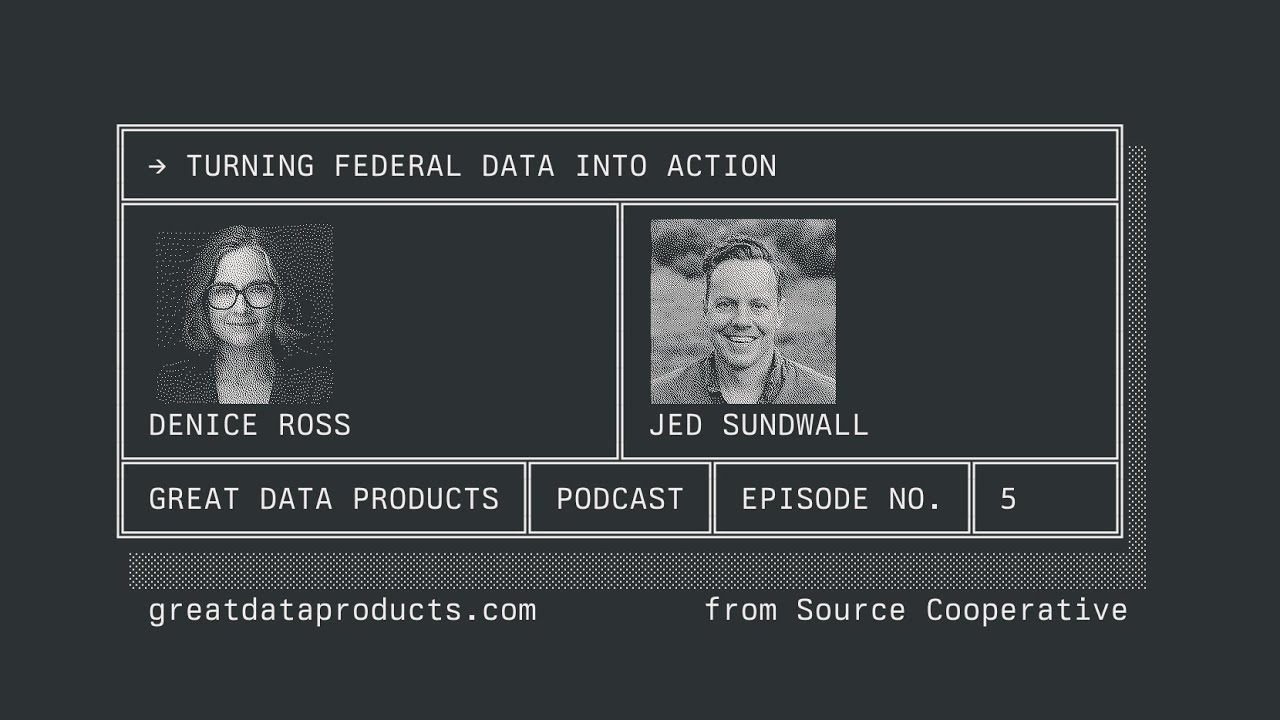
Jed talks with Denice Ross about the critical role of federal data in American life, what happens when government data tools disappear, and why building a healthier ecosystem requires both stable federal data and external innovation.
Read more →
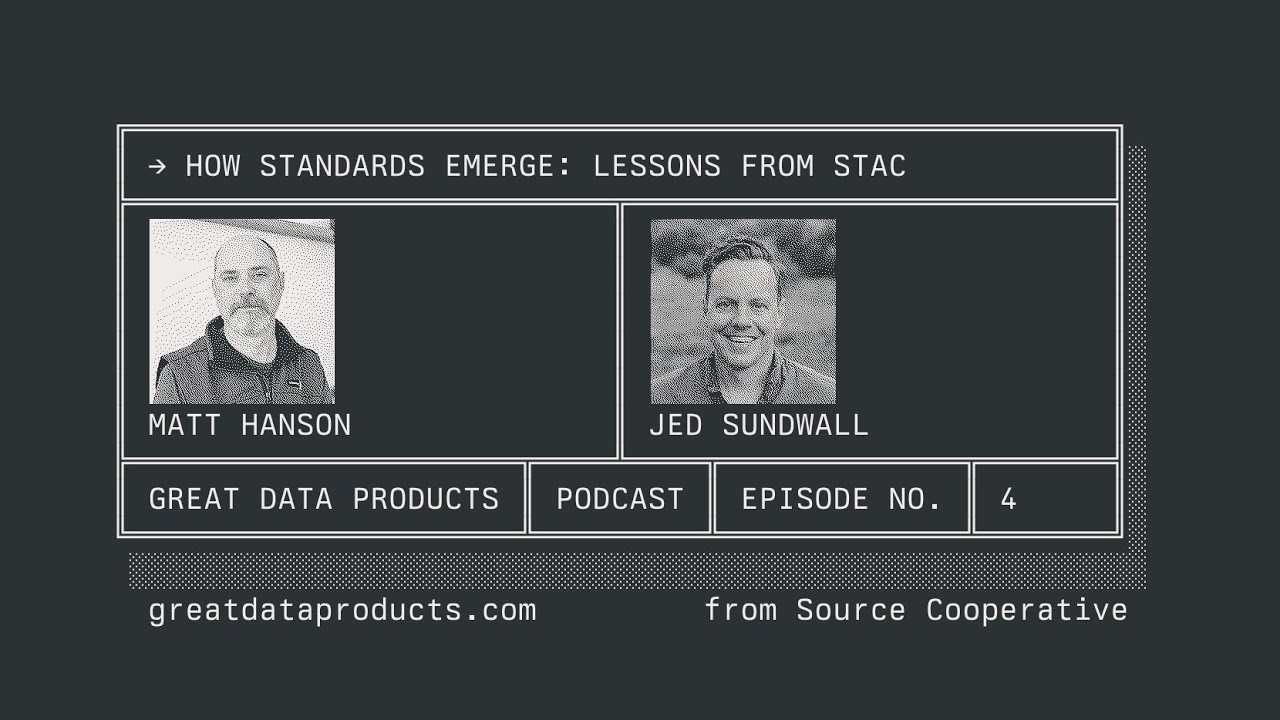
Jed talks with Matt Hanson about the SpatioTemporal Asset Catalog (STAC) specification, why adoption is the only metric that matters for standards, and what the ‘guerrilla standards’ approach teaches us about building data ecosystems.
Read more →
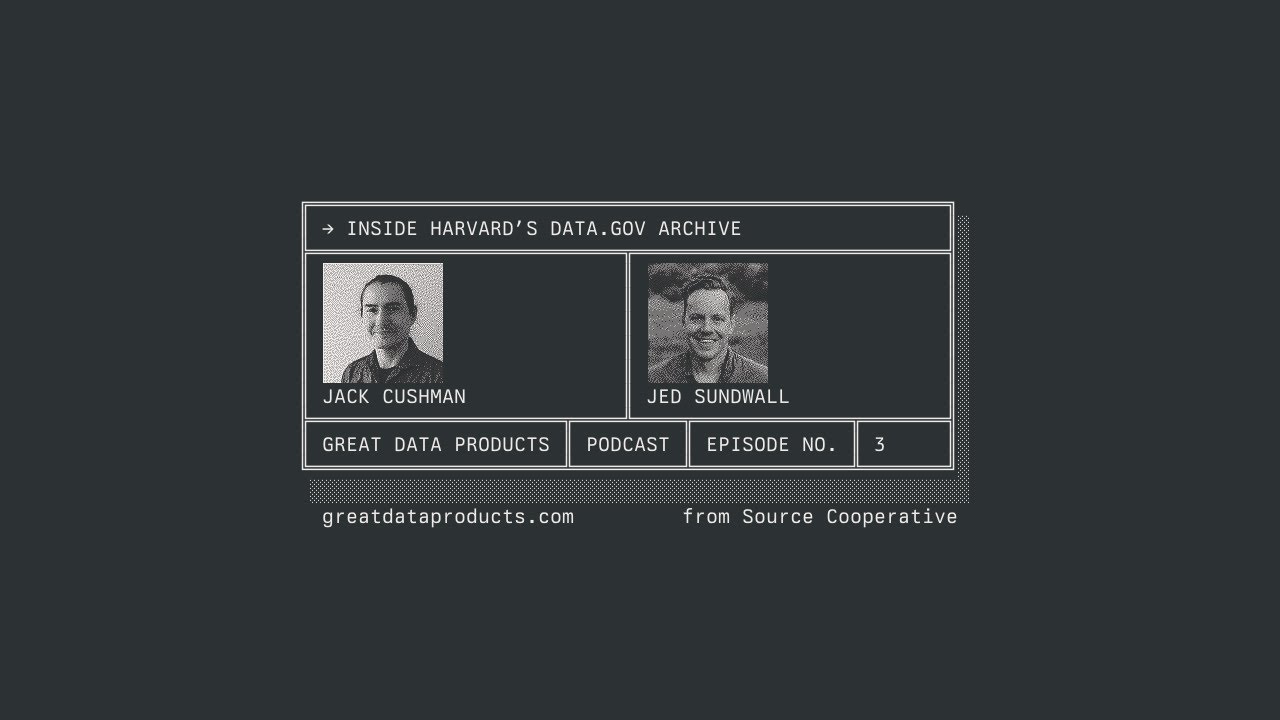
Jed talks with Jack Cushman from the Harvard Law School Library Innovation Lab about their project to archive and preserve more than 311,000 datasets from Data.gov. We explore how they use BagIt for long-term preservation, built a serverless search interface that makes 17.9 TB of data discoverable in the browser, and what this means for the future of online archives.
Read more →
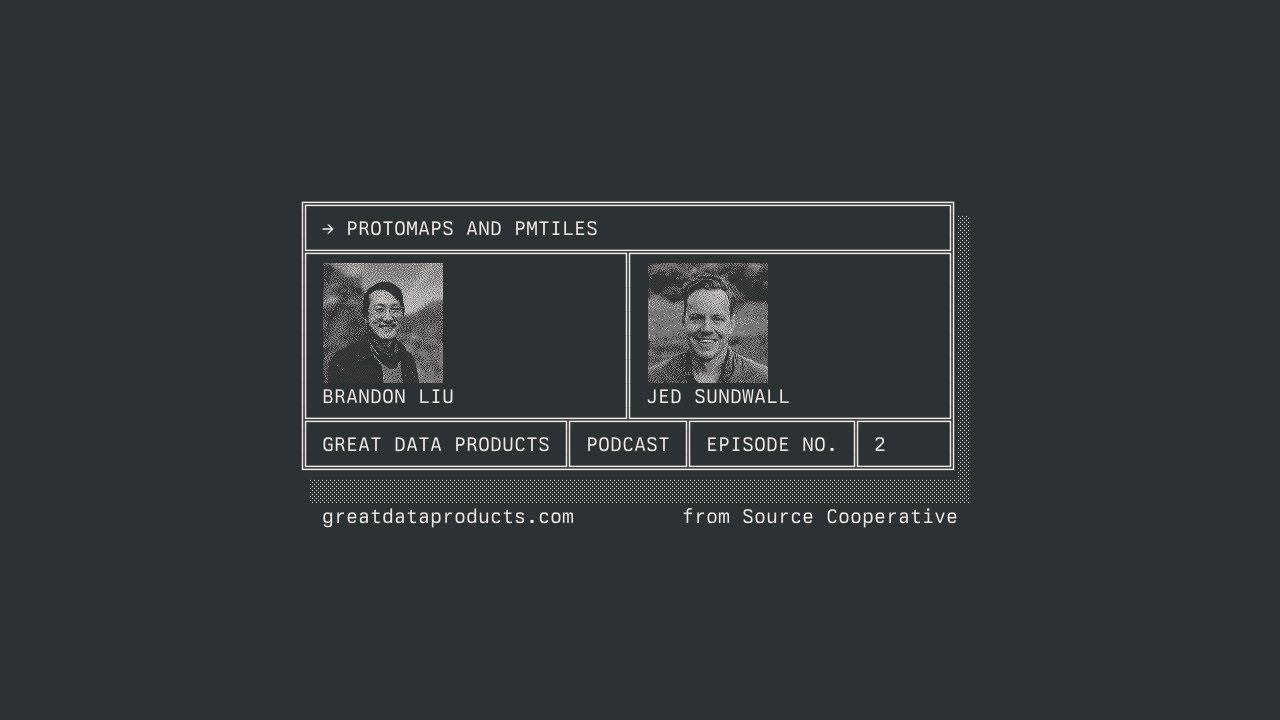
Jed talks with Brandon Liu about Protomaps, PMTiles, and why a compelling base map as a data product matters. We cover open-source, customizable alternatives to Google Maps, how PMTiles enables single-file, static hosting, and practical ergonomics that help developers put maps on the web.
Read more →
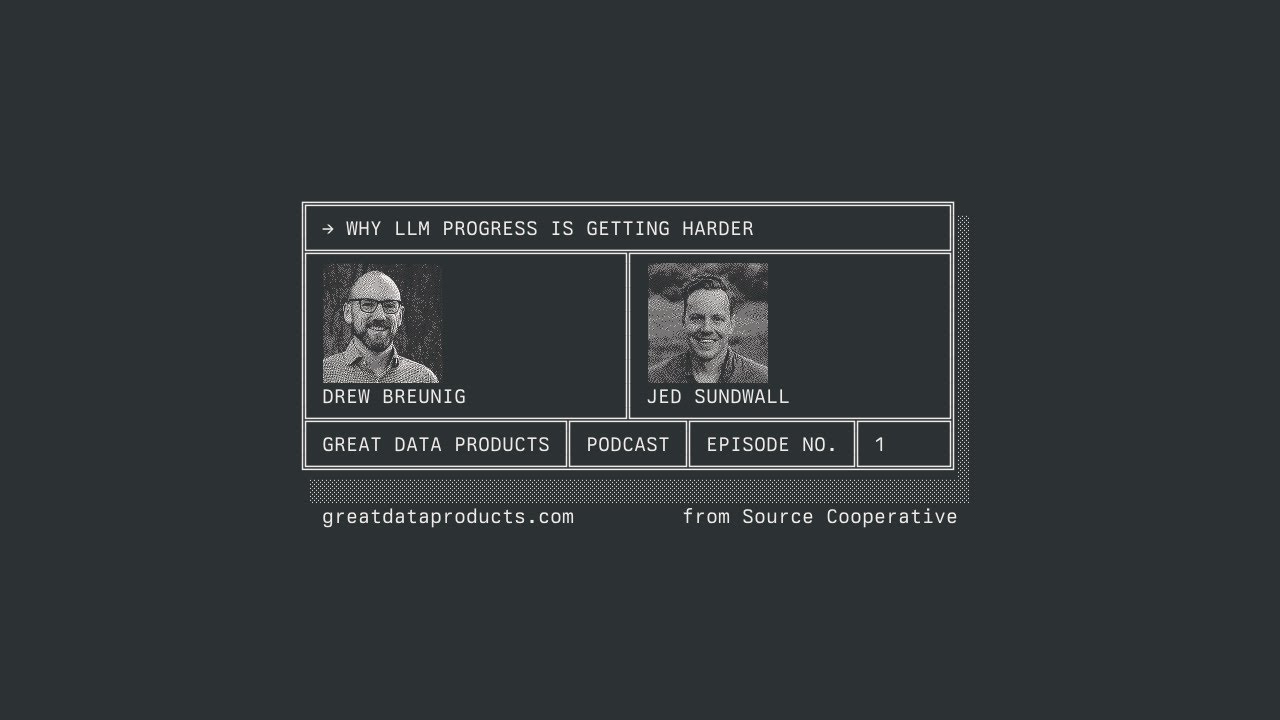
Jed Sundwall and Drew Breunig explore why LLM progress is getting harder by examining the foundational data products that powered AI breakthroughs. They discuss how we’ve consumed the “low-hanging fruit” of internet data and graphics innovations, and what this means for the future of AI development.
Read more →